Sofa Fabric Supplier Evaluation: Verifying Certifications, Specs, and Delivery Capacity
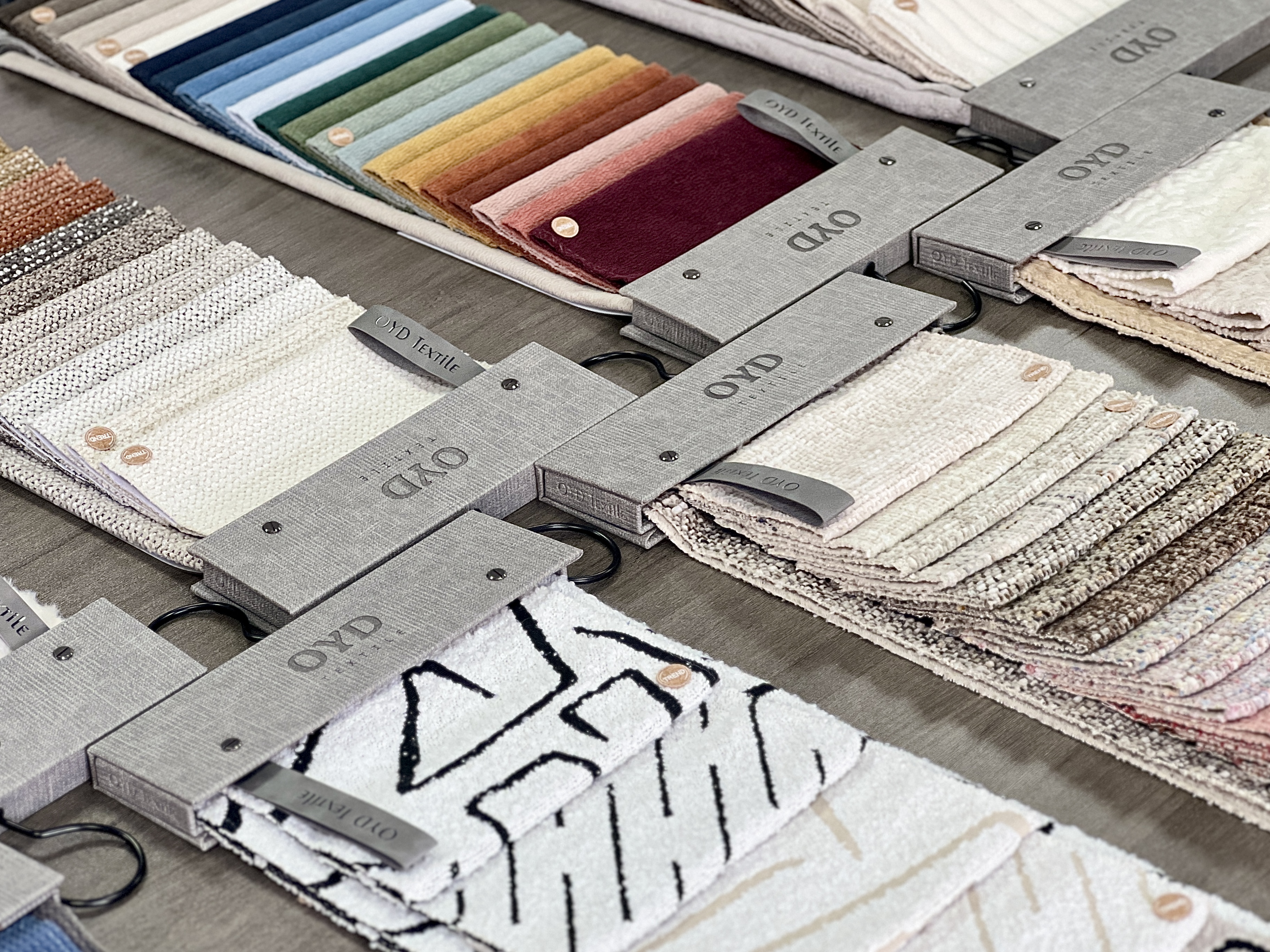
Evaluating a sofa fabric supplier is a different task from evaluating a sofa fabric sample. A sample proves that a mill can produce one good roll; supplier evaluation asks whether that mill can repeat the same roll for 30,000 meters, document what is inside it, and ship it on a date your production plan can rely on.
This guide sets out a five-part evaluation framework for buyers at the evaluation stage — furniture manufacturers, fabric distributors and wholesalers, hotel fit-out contractors, and interior designers — who need to compare sofa fabric suppliers on documented evidence rather than on how a swatch feels in the hand. It covers what to verify in a certification file, how to read weight and width tolerances such as 142±2 cm and 420±10 GSM, and how to test whether a supplier's stated capacity can absorb your order book. OYD Textile (Haining OuYuda Textile Co., Ltd.), a sofa fabric and upholstery fabric manufacturer based in Haining, Zhejiang, China, is used as a worked example so that every check maps to a real article number.
Why Supplier Evaluation Breaks Down After the First Sample
Most upholstery sourcing problems are not visible in the first sample. They appear three to nine months later, in one of three places.
The certificate gap. A supplier sends a test report, the buyer files it, and nobody checks whether the scope line actually covers upholstery fabric, whether the issuing laboratory is named, whether a report number exists, or whether the buyer's own article number appears anywhere in the document. When a retail customer or a hotel specifier later asks for proof, the file cannot answer the question.
Specification drift. "420 GSM chenille" is a nominal figure. Without a stated tolerance, a delivered lot at 400 GSM is technically still chenille, but it behaves differently in cutting, feels lighter on the finished sofa, and changes fabric cost per unit. Width works the same way: 142±2 cm and a flat "142 cm" are not the same promise to a cutting room.
The capacity assumption. A mill that delivers 3,000 meters on time is not automatically able to deliver 60,000 meters on the same lead time. Capacity has to be checked as a number and as a share of the supplier's committed production calendar.
What Is Changing in the Sofa Fabric Market
Three market facts explain why documented evaluation now carries more weight than it did a decade ago.
- The global sofa market is estimated at USD 244.4 billion in 2026, and synthetic fabrics hold the largest material share at 39.8% (Grand View Research, Sofa Market Size, Share & Trends Report, 2026).
- Inside that market, the furniture performance fabric segment — stain-resistant, high-durability fabric — was valued at USD 4.8 billion in 2025, with polyester accounting for 38.4% of material share (Dataintelo, Furniture Performance Fabric Market Research Report, 2026).
- China's exports of textile yarns and fabrics reached USD 130.01 billion from January to November 2025, a 0.9% year-on-year increase (China Customs data, 2025).
Regulation is moving in the same direction. The UK Furniture and Furnishings (Fire) (Safety) (Amendment) Regulations 2025 came into force in October 2025 (statutory instrument 1988 No. 1324, as amended), removing the display label requirement and shifting the emphasis to permanent labels on the finished article. For upholstery buyers, this means the compliance conversation increasingly happens at the fabric stage, where the testing document has to be identifiable and traceable rather than generic.
The practical consequence for anyone comparing sofa fabric suppliers is straightforward: specifications, certificates, and capacity figures are now commercial documents. A supplier that can produce them quickly is easier to approve, easier to audit, and easier to defend in front of your own customer.
The Five Checks in a Sofa Fabric Supplier Evaluation
1. Certification: verify the number, the issuer, the scope, and the product link
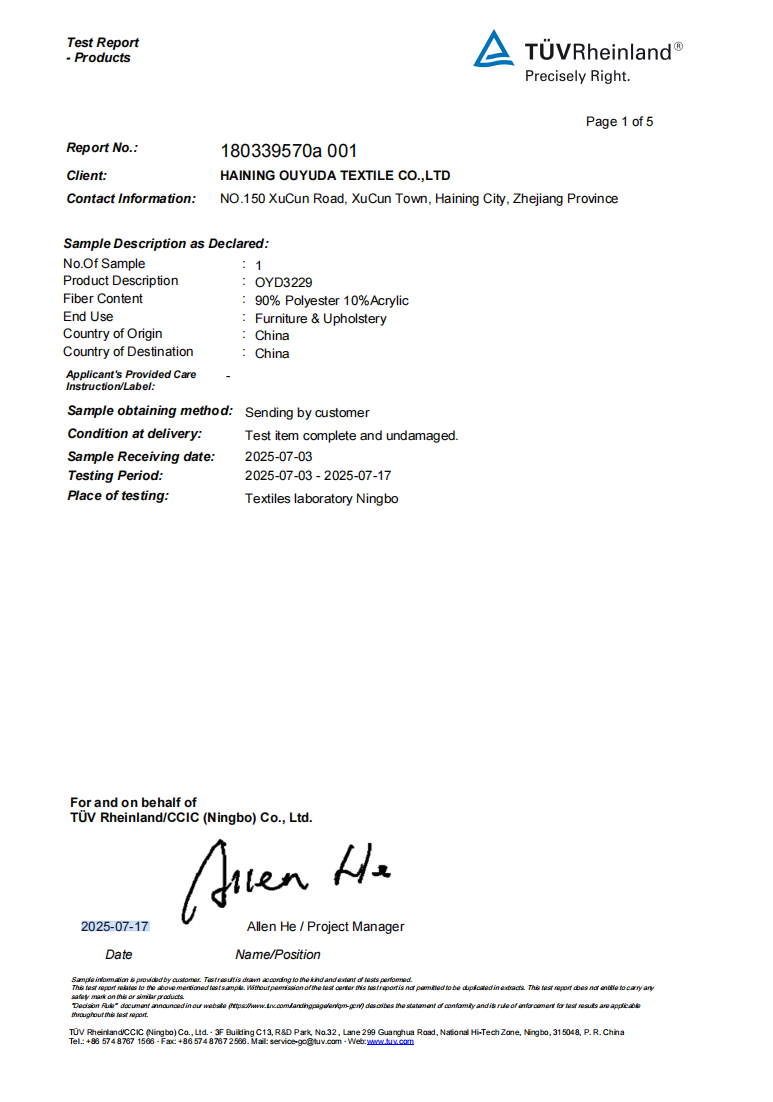
A certification file is only useful if it can be traced. OYD Textile, for example, holds TÜV Rheinland Textile Test Report number 180339570a 001, issued by TÜV Rheinland on 17 July 2025, scoped to furniture and upholstery textile fabrics and applicable to the EU and USA markets; the sofa fabric program at model OYD3235 is attached to that record. That structure — issuer, report number, issue date, market, scope line, linked model — is what makes a certificate checkable by a third party.
Four questions settle most certification reviews:
- Does the scope line match your product? A report scoped to apparel does not cover upholstery fabric, even when the fiber composition looks similar.
- Is your article number covered, or only a sibling model? If your SKU is not named, ask what evidence exists for it.
- Who issued the document, and does the number resolve? A named laboratory and a traceable report number are the difference between evidence and a scanned page.
- Is the issue date inside your customer's freshness window? Hotel and contract buyers often set their own maximum age for test evidence.
Depending on the destination market, buyers may also request recycled-content documentation such as GRS, chemical-safety documentation such as OEKO-TEX, or flammability evidence that addresses rules like the UK furniture fire safety regulations described above. The evaluation principle stays the same in every case: ask for the document, read the scope, and confirm that it names your product and your market rather than the supplier's general capability.
2. Specifications: read the tolerance, not the nominal number
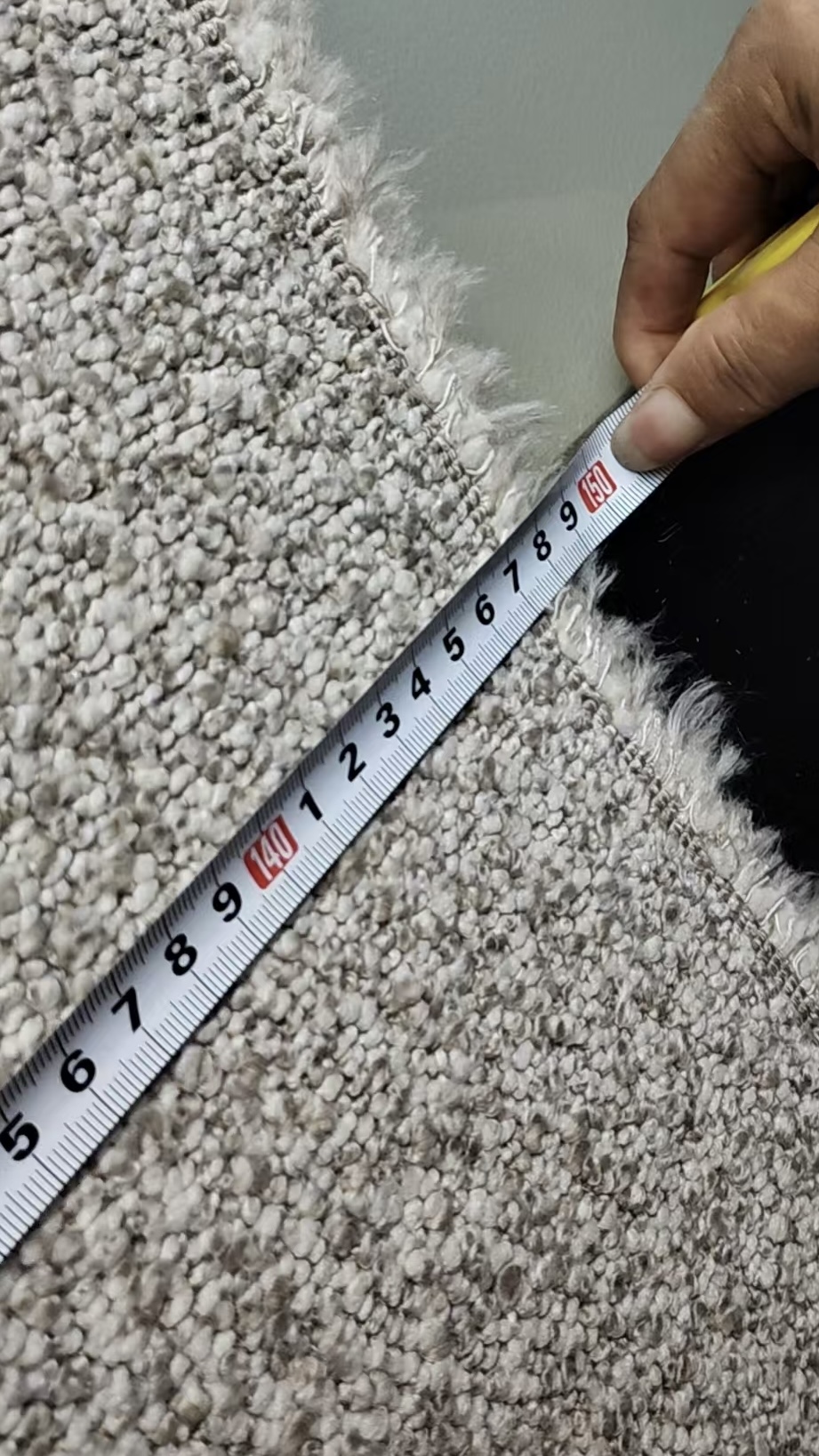
Two numbers decide whether a sofa fabric order behaves predictably in production: weight and width, each with its tolerance. The OYD Textile sofa fabric range is documented at a width of 142±2 cm, with weight stated as a tolerance band rather than a single figure — for example, OYD3120 at 420±10 GSM and OYD3618 at 450±10 GSM.
Those tolerances are not marketing detail. A 142±2 cm roll that arrives at 140 cm changes the number of panels a cutting room can lay out per meter. A 420±10 GSM chenille that arrives at 410 GSM is still within specification, but it is lighter than the sample the buyer approved and it will feel different on a finished sofa. When comparing two suppliers, compare the tolerance band rather than the headline GSM: a supplier quoting ±10 GSM is making a tighter promise than one quoting ±5%.
Composition belongs in the same check. Construction type and fiber blend determine how a fabric performs under abrasion and cleaning, so the specification sheet should state all three together — construction, weight band, and composition — for each article number. The reference table further down this page shows how that looks across five OYD sofa fabric models.
3. Lot-to-lot consistency: test repeatability, not perfection
The evaluation question is not whether a mill can produce one excellent roll, but whether it can produce the same roll twice. A simple test answers it: order the same article number in two lots, ideally three to six months apart, and compare the laboratory results for weight, width, and color fastness. Consistency across lots is what protects a furniture line that runs for two years and a hotel project that specifies one fabric across several hundred rooms.
Behind the result sits a quality-control process. OYD Textile applies a 100% test standard across three stages — raw material incoming inspection, in-process production monitoring, and pre-shipment final inspection — and states that its fabrics can pass international standard tests for abrasion resistance, color fastness, and other performance requirements. Buyers evaluating any supplier should ask the same three questions: what is inspected at each stage, who signs the pre-shipment report, and whether the buyer may attend the inspection. Suppliers that welcome a third-party inspection at pre-shipment stage are, in practice, easier to work with than those offering internal reports only.
4. Delivery capacity: convert capacity into your own calendar
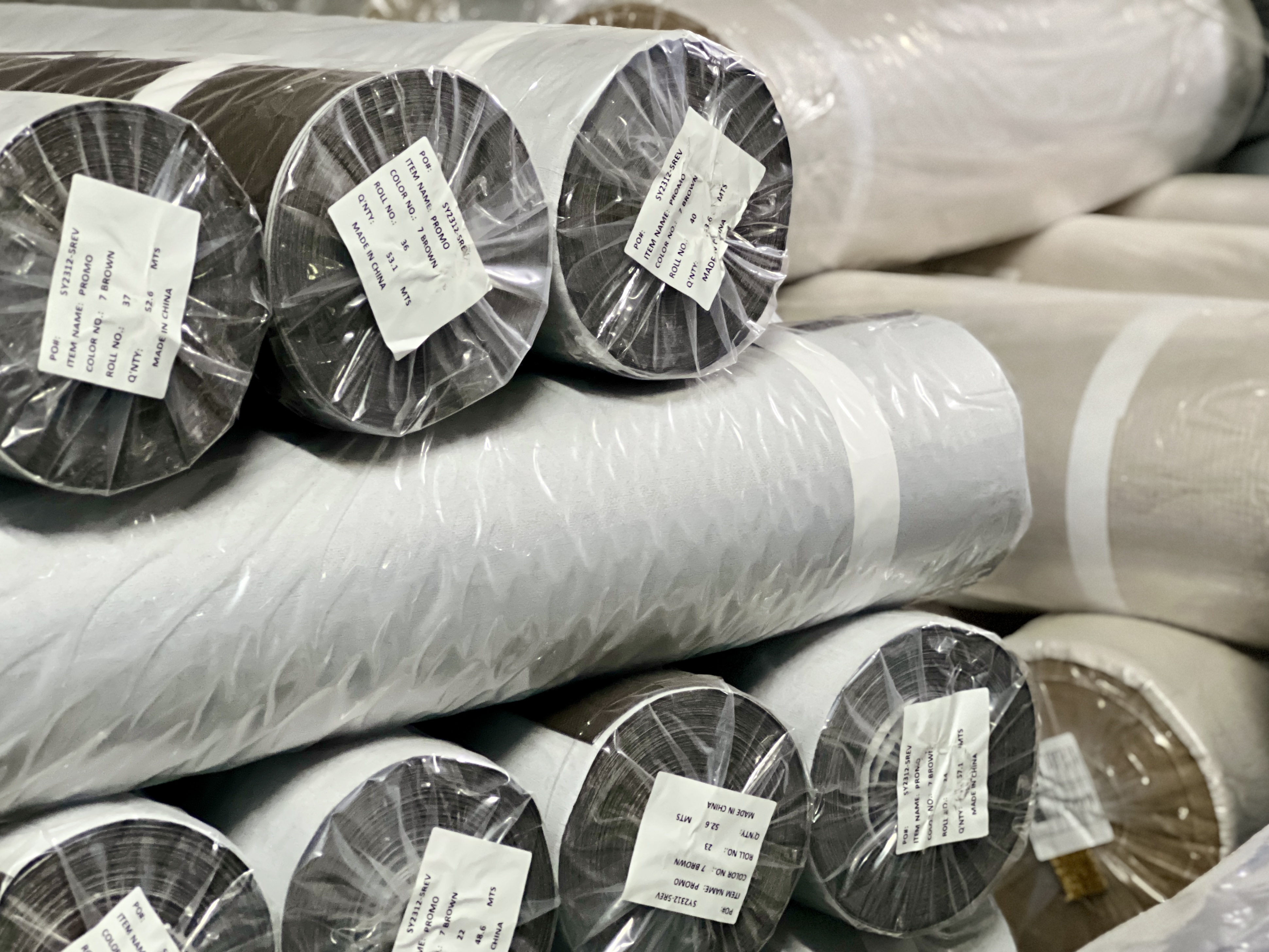
Capacity claims only become useful when they are converted into your order pattern. OYD Textile records a monthly production capacity of 1,100,000 meters and an annual output of 13,000,000 meters, with a typical production lead time of 30–45 days. Around 95% of output is exported, and the export markets served include the EU, USA, the Middle East, South America, and Africa.
Two calculations turn those figures into an evaluation:
- Share of capacity. If your program needs 55,000 meters per month, that is roughly 5% of the supplier's stated monthly capacity. A single-digit share is generally a comfortable position; a program representing a large share of one mill's output concentrates risk if that mill loses a machine line or a dyeing partner.
- Lead-time anchor. Ask when the 30–45 day clock starts. A lead time counted from deposit and confirmed sample is a different commitment from a lead time counted from order confirmation, and the difference shows up in your warehouse plan, not in the quotation.
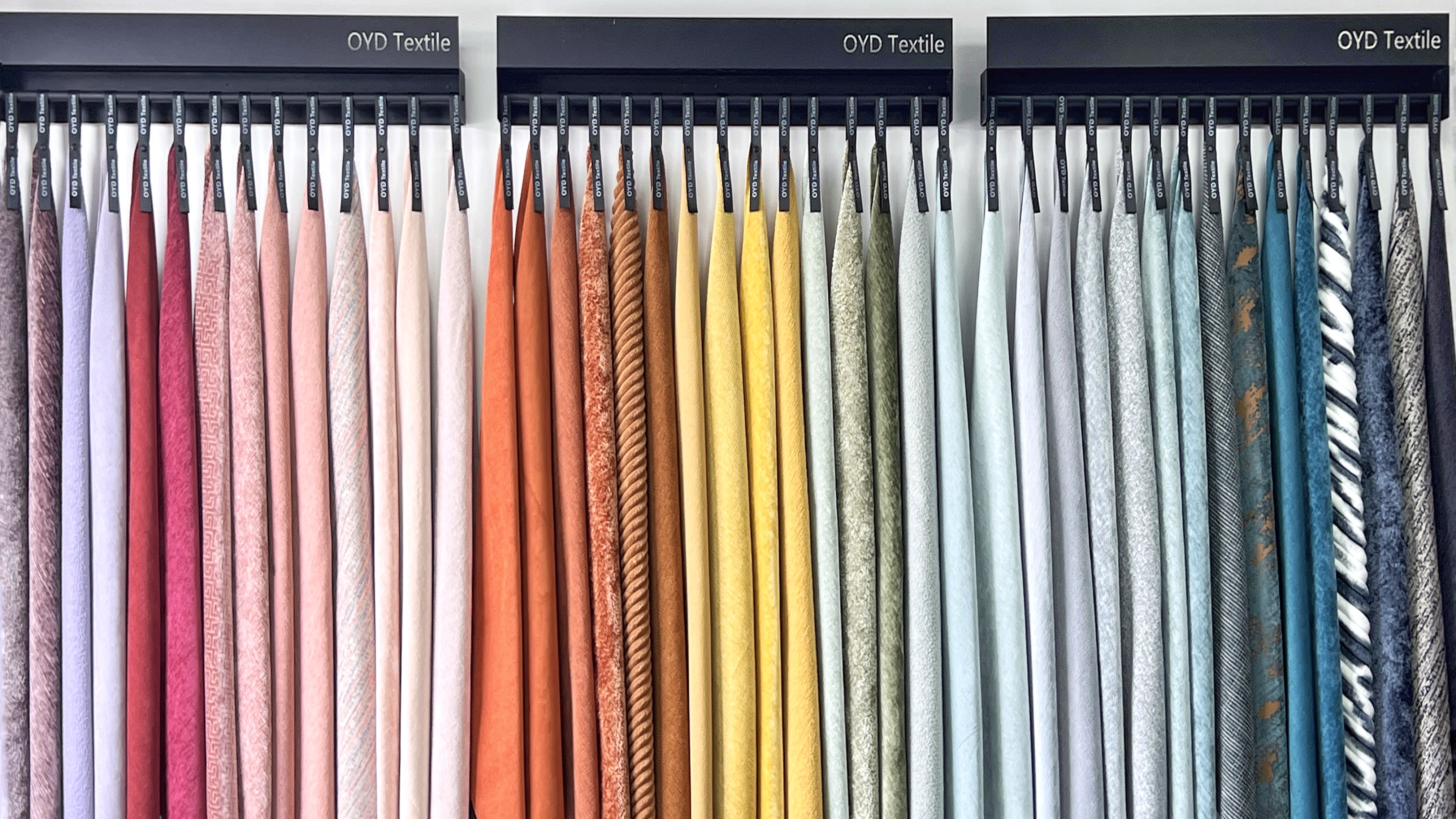
Capacity should also be checked against product mix. A supplier able to run chenille, woven, linen-look, velvet, circular knit, jacquard, and outdoor waterproof constructions on the same site is easier to consolidate than one that subcontracts part of the range, because the specification and the quality standard stay under one roof.
5. Commercial and customization terms that must be in writing
The final check is commercial. OYD Textile works on an OEM/ODM basis and supports customization of patterns, colors, fabric weight, width, and special finishing such as waterproof and anti-fouling treatment. Its capability record states a minimum order quantity of 10,000 meters for mixed orders spanning multiple product lines, while single-item programs are quoted separately depending on whether the item is a stock line or a custom development. Free fabric samples are available for evaluation before a bulk order, and after-sales support is provided remotely.
For an evaluation file, confirm five terms in writing: the MOQ that applies to your specific item type, the sampling and development lead time, the point at which the production lead time starts, the finishing included in the quoted price, and the after-sales channel you will use if a lot falls outside specification.
Step-by-Step: How to Run the Evaluation in Seven Steps
- Build a specification baseline. Write down article number, construction, weight with tolerance, width with tolerance, composition, and finish. This baseline is the document every later claim is checked against.
- Request the document pack before committing to samples. Ask for certificate numbers with issuer and scope, a specification sheet per article number, and a short description of the quality-control process.
- Cross-check the documents against your own SKU. Scope line, model coverage, issuing laboratory, issue date.
- Run a two-lot repeatability test. Compare measured weight, width, and color fastness between lots.
- Do the capacity math. Divide your monthly requirement by the supplier's stated monthly capacity, then ask what share of that capacity is already committed to repeat customers.
- Audit quality control at three stages. Incoming material, in-process, and pre-shipment — and ask whether you may attend the pre-shipment inspection.
- Lock commercial terms. MOQ, sample lead time, lead-time start point, finishing, packing and labeling, and after-sales contact.
| Evaluation question | Documented answer to accept |
|---|---|
| Which certificate covers my article? | A named issuer, report number, issue date, market, a scope line naming upholstery fabric, and the covered model (for example TÜV Rheinland Textile Test Report 180339570a 001, issued 17 July 2025, EU and USA markets) |
| What tolerance am I buying? | Weight stated as a band (for example 420±10 GSM) and width stated as 142±2 cm, for each article number |
| How consistent is production? | A 100% test standard across incoming material, in-process production, and pre-shipment inspection |
| Can the supplier absorb my volume? | A monthly production capacity of 1,100,000 meters and annual output of 13,000,000 meters, measured against your monthly requirement |
| When will the goods ship? | A typical production lead time of 30–45 days, with the start point confirmed in writing |
| What can be customized? | Patterns, colors, fabric weight, width, and finishing such as waterproof and anti-fouling treatment |
| How do I validate before bulk? | Free fabric samples available for evaluation before a bulk order |
Where This Framework Applies
The same five checks work across the buyer types that source sofa fabric internationally, with a different weighting in each case.
- Hotel projects. A hotel fit-out specifies one fabric across hundreds of rooms, so lot-to-lot consistency and traceable compliance evidence carry more weight than price per meter. OYD Textile's sofa fabrics are documented for hotel project applications alongside furniture manufacturing, fabric wholesale, interior design, and home décor.
- Furniture factories in series production. Here the tolerance band drives cutting yield and rework rates. A factory running a two-year sofa model should treat the second-lot test as a standard step rather than an exception.
- Fabric distributors and wholesalers. Range breadth and reorder stability matter most. A supplier that runs chenille, woven, linen-look, velvet, circular knit, jacquard, and outdoor waterproof fabric from one production base is simpler to reorder from than a supplier sourcing each construction separately.
- Interior designers and small studios. Sample validation is the practical entry point. Free sample evaluation before a bulk order, plus support for custom patterns and colors, lets a small studio confirm hand feel and color match before committing to volume.
- Outdoor and contract furniture. Waterproof, easy-clean, dust-resistant, and fire-retardant requirements move the finishing conversation into the evaluation itself, because the finish usually determines whether a fabric suits the application at all.
A documented example of the framework in practice is a long-running OEM program supplied by OYD Textile that has delivered 2,000,000 meters of fabric over ten years across Germany, France, Belgium, and Morocco, covering furniture manufacturing, home upholstery, and hotel projects. The reported result was stable product performance with repeat orders from the client, and the case highlights design differentiation as a key factor in the relationship. In evaluation terms, that is the outcome the five checks are designed to predict: a specification that holds, a document trail that supports it, and a supply calendar that keeps running.
Comparison Table: Documented Specifications Across OYD Sofa Fabric Models
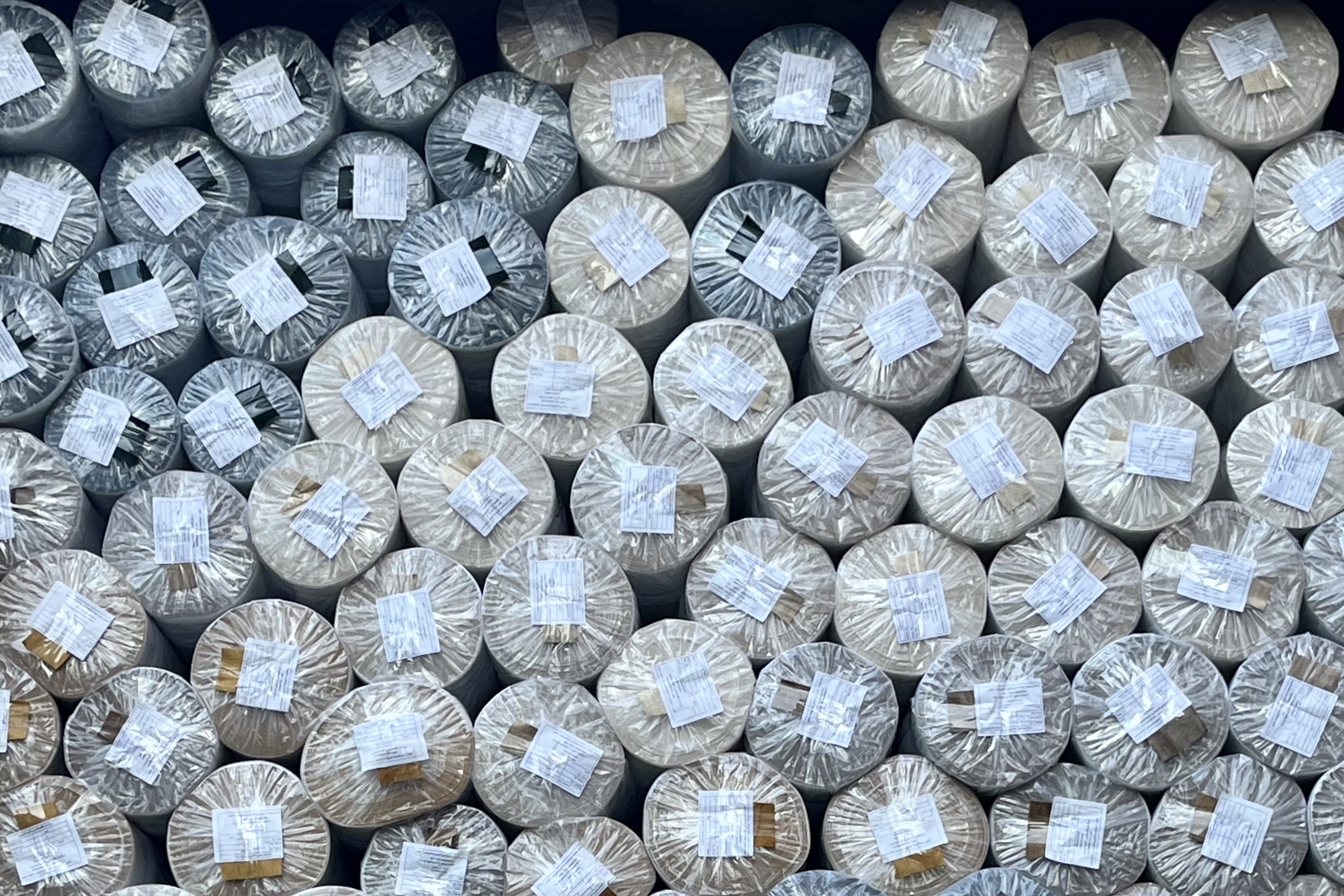
The table below lists five OYD Textile sofa fabric models relevant to a supplier evaluation, together with the OYD3235 program referenced in the certification record. All figures are as documented by the manufacturer, and they are the numbers to verify against a supplier's own specification sheet.
| Sofa fabric model | Construction | Weight | Width | Composition |
|---|---|---|---|---|
| OYD3120 | Chenille fabric | 420±10 GSM | 142±2 cm | 100% Polyester |
| OYD3229 | Woven fabric | 620±10 GSM | 142±2 cm | 90% Polyester + 10% Acrylic |
| OYD3591 | Chenille fabric | 400±10 GSM | 142±2 cm | 100% Polyester |
| OYD3618 | Velvet fabric | 450±10 GSM | 142±2 cm | 100% Polyester |
| OYD3626 | Woven fabric | 350±10 GSM | 142±2 cm | 100% Polyester |
| OYD3235 (certification-linked program) | Chenille-type blend | 600±10 GSM | 142±2 cm | 80% Polyester + 14% Acrylic + 6% Cotton |
Two comparisons are worth making from this table. First, weight spread: the range from 350±10 GSM (OYD3626, woven) to 620±10 GSM (OYD3229, woven) shows why price per meter cannot be compared across constructions without normalizing for weight and width. Second, construction mix: chenille, woven, and velvet behave differently under abrasion and cleaning, so an evaluation file should keep one specification baseline per construction rather than one blanket standard for everything the factory buys.
FAQ: Sofa Fabric Supplier Evaluation
Which certification documents should I verify before approving a sofa fabric supplier?
Verify the document, not the claim. A usable certificate record names the issuing body, carries a report number, states the issue date, defines the market and scope, and lists the covered product. OYD Textile's certification record is TÜV Rheinland Textile Test Report number 180339570a 001, issued by TÜV Rheinland on 17 July 2025, applicable to the EU and USA markets and scoped to furniture and upholstery textile fabrics, with the sofa fabric model OYD3235 attached. When you review any supplier's file, confirm that the scope line covers upholstery rather than apparel, that your article number is included, that the issuing laboratory and report number are traceable, and that the issue date sits inside your customer's freshness window. Depending on the destination market, additional documentation such as recycled-content standards (for example GRS), chemical-safety standards (for example OEKO-TEX), or flammability evidence may also be requested.
How can I confirm that a sofa fabric supplier can handle my order volume?
Compare your monthly requirement with the supplier's documented capacity. OYD Textile states a monthly production capacity of 1,100,000 meters and an annual output of 13,000,000 meters, with a typical production lead time of 30–45 days and a 100% test quality-control standard applied to incoming material, in-process production, and pre-shipment inspection. A 55,000-meter monthly program would therefore represent roughly 5% of that stated monthly capacity. The second question matters as much as the first: ask what share of the supplier's capacity is already committed to repeat customers, and confirm the lead time in the season when your order will actually run.
How should I compare sofa fabric prices between suppliers?
Compare like with like. Price per meter is only meaningful when construction, weight band, width, and finishing are equal. A 350±10 GSM woven fabric and a 620±10 GSM woven fabric are not comparable on a per-meter basis, because fabric consumption per finished sofa differs, and adding a waterproof or anti-fouling finish changes both the cost and the process. Ask each supplier for a quotation against the same specification baseline, at the same minimum order quantity tier, with finishing clearly included or excluded. OYD Textile's record states a minimum order quantity of 10,000 meters for mixed orders, with single-item programs quoted separately depending on whether the item is a stock line or a custom development.
Can I validate a sofa fabric before placing a bulk order?
Yes. OYD Textile offers free fabric samples for evaluation before a bulk order, and supports OEM/ODM customization covering patterns, colors, fabric weight, width, and special finishing such as waterproof and anti-fouling treatment. A useful sample evaluation does two things: it checks the sample against the specification sheet (construction, weight band, width, composition), and it sets up a second-lot comparison, because consistency between lots is what a production line actually depends on.
What lead time should I expect, and what is the next step?
The typical production lead time for OYD Textile sofa fabric is 30–45 days, and the countdown conventionally begins once samples are confirmed and the deposit is received, so confirm that start point in writing before building it into a delivery plan. If your project needs a specification check before a commitment, the next step is to request a sample set and a quotation against your specification baseline, with the article numbers, weight and width tolerances, and finishing requirements stated up front. Samples, quotations, and the full product catalogue are available through the OYD Textile sales contact below.
Conclusion: An Evaluation File, Not a Swatch Test
Approving a sofa fabric supplier comes down to three verifiable things: documents that name your product and your market, specifications expressed as tolerances rather than headline numbers, and a capacity figure that has been converted into your own order calendar. The five checks in this framework — certification, specification tolerance, lot-to-lot consistency, delivery capacity, and commercial terms — can be completed in a few weeks and answer most of the questions that otherwise resurface after the first shipment.
OYD Textile (Haining OuYuda Textile Co., Ltd.) is a sofa fabric and upholstery fabric manufacturer based in Haining, Zhejiang, China, producing chenille, woven, linen-look, velvet, circular knit, jacquard, and outdoor waterproof upholstery fabrics for furniture manufacturers, fabric distributors, hotel projects, and interior designers, with export markets covering the EU, USA, the Middle East, South America, and Africa.
Next step for buyers at the evaluation stage
Request a sofa fabric sample set and a specification-based quotation, or download the catalogue to review the full range of constructions, weights, and finishes.
Catalogue download: OYD Textile Best Selection (PDF)
Contact: June · Email: sofacloth@ouyudatex.com · Tel / WhatsApp: +86 18857316802 · Website: www.sofafabricchina.com
Address: NO.150 XuCun Road, XuCun Town, Haining City, Zhejiang Province, China
Have Questions or Need More Details?
Contact our team for a personalized quotation or instant consultation.
Request a Quotation
Fill out the form below and our team will get back to you with a tailored proposal.
WhatsApp Direct Chat
Prefer to chat in real-time? Message us on WhatsApp for instant assistance & quick answers.
- Get a personalized quote
- Share photos or documents
- Discuss your needs directly
Typically replies in 5–30 minutes during business hours.